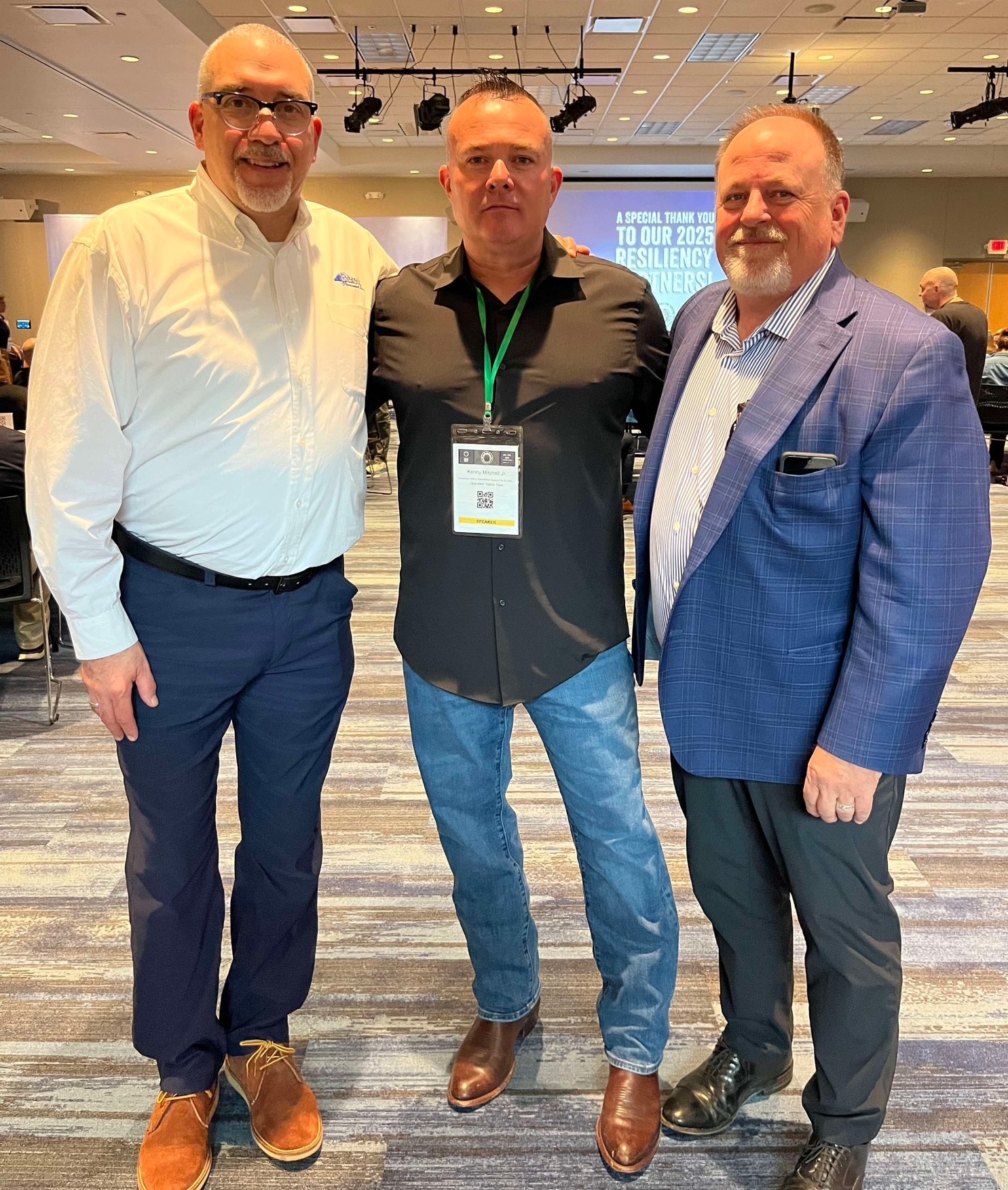
For seven years, Kenny Mitchell Jr. was lost. He didn’t want to be around anyone, and seemingly, no one wanted to be around him. Mitchell’s wife Jessica died suddenly in 2013, leaving him and his 7-year-old daughter to continue on – alone.
Mitchell, an accomplished and dedicated firefighter and emergency responder, recalls what those first days were like after Jessica’s death and specifically, what went through his mind when he stood outside his daughter’s bedroom door, about to reach for the doorknob he would eventually open, reluctantly and grudgingly.
“I’m standing there thinking, ‘I have to tell her that her mom has passed away’,” Mitchell told the 200-plus first responders who gathered Monday, May 5, at St. Elizabeth Training and Education Center in Erlanger, KY, for the Tactical Tools for Thriving Annual First Responder Symposium. “She cried harder than I’ve ever seen anyone cry.”
He didn’t know what to do next. So four days later, he did what seemed the most natural thing to do – he went back to work. And that’s when his wall went up and his seven-year slide began.
“It was the beginning of a mental health decline in my life,” said Mitchell, adding that he refused to go to therapy and also decided his daughter didn’t need it either. Until she lost her first tooth and said to him, “Dad, can you tell the tooth fairy to keep the tooth and just bring back Mom? That’s the moment I realized I’d failed her and I’d failed myself.”
 Mitchell kicked off the event, which focuses on the overall wellness of first responders and their families in the tri-state region. Among the 25-plus sponsors, Everest Financial and COPFCU were two of the "Sentinel" level organizations present.
Mitchell spoke frankly about how he turned down offers of help, refused to speak to anyone unless they “wore the turnout gear,” went to bars looking for fights, and essentially ignored all the signs that his mental health was nosediving.
In 2020, another tragedy occurred when Mitchell’s friend Tom, a fellow first responder, took his own life. It was at Tom’s funeral that Mitchell scrawled some notes on a napkin, which he still carries with him. He looks back on this turning point as the birth of Operation Yellow Tape – his personal campaign that urges first responders to recognize and acknowledge signs of post-traumatic stress, depression, and other mental health challenges common in this field.
“There are too many of us to ever feel alone,” Mitchell said, quoting the slogan that adorns the Operation Yellow Tape shirts, posters, and social media pages that represent this push for first responders to take better care of themselves.
“We all work inside the yellow tape,” he said. “It’s outside the yellow tape where all these problems start in our lives.
“No one teaches us how to go home,” Mitchell added in reference to how first responders must “decompress” when they transition between work and home. “But we are a lot more prepared for life outside the yellow tape than we think we are.”
Following Mitchell’s address, corrections officer William Young, clad in a “Be A Good Person” T-shirt, discussed how friends and family of police, firefighters, EMTs, nurses, and corrections staffers face a unique situation.
“Every single person you touch is affected by your work,” said Young, whose podcast "Just Corrections" is "intended to educate, engage, and equip correction personnel with the knowledge and formation they need to safely and successfully navigate this profession."
Young posed the question: “Who gets to decide what’s traumatic? We do.” He said the average person will experience two bona fide traumatic events in their lives, based on a colleague’s official definition of trauma. Young then asked the attendees how many cases of trauma those in law enforcement see annually. The answer? 900.
In fact, the Substance Abuse and Mental Health Services Administration (SAMHSA) reports that roughly 1 in 3 first responders develop PTSD, compared with 1 in 5 in the general population.
In setting this up, Young rattled off examples of trauma. “Car accident? Fire? Ever walk up on a car and you can’t see inside it? Divorce?”
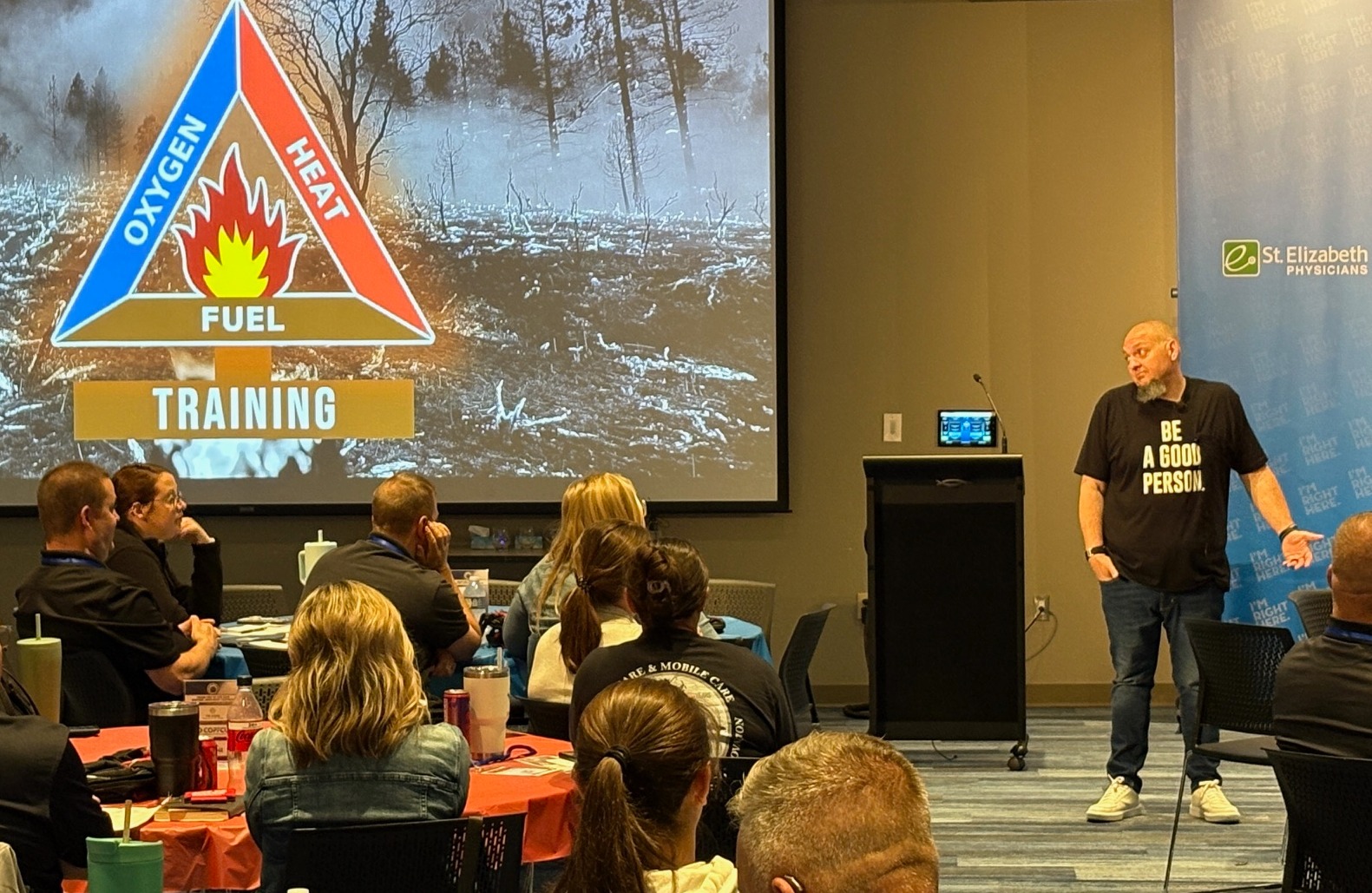
Like Mitchell, Young asked, “What is the biggest obstacle to our wellness? We are.” Such barriers, he said, manifest themselves through stereotypical questions and answers about this career choice. Young’s list of “things NOT to say” to someone struggling in corrections, firefighting, or emergency medical response includes the following:
● Leave work at work and home at home.
● This job isn’t for everyone.
● You knew what you signed up for.
● It’s just part of the job.
Such comments, Young emphasized, are typically made after a trainee, someone in the middle of their career, and even those with three-plus decades of experience witness sometimes daily.
“These are things that we see that we’re not prepared for,” he said. “But we normalize them in the name of self-preservation so we don’t feel them.”
But, Young added, there are pieces in place to provide relief, peer services and collegial therapy. But it’s up to the individual to take the first step.
“The biggest obstacle is you,” he said. “You have to be able to put that divider in place. Give yourself some time to unwind. You deserve to be healthy. You deserve to be happy. You deserve to live life.”
 Before an afternoon session of breakout sessions started, Chris and Tara O’Barsky delivered the last of the keynotes and addressed “Through the Fire: Our Family’s Journey to Healing.” The Salisbury, MD-based couple, in their first presentation together, shared challenges they have faced and continue to face in their professional and personal lives and how sometimes, the lines blur.
“It’s not normal to roll up on an 18-year-old who’s been stabbed in the neck … he’s in his last gurgling breath … only to find out that his mom went to school with your wife. Tell me what’s normal about that. Nothing. But we have to find some way to process that,” said Chris.
He then opened up to the group and shared his trigger – the event that, in his words, led him to where he is today. It involved the suicide of a 16-year-old girl, Sept. 10, 2018.
“I left that scene a wreck,” he said. “All I could see was my daughter in that tree. This is the event that caused me to go in a downward spiral.”
He said he started to drink excessively and grew depressed, which he said, for him, means “feeling nothing.” His anxiety increased. He isolated himself at work. He avoided people. He felt grief, having witnessed a SIDS case, the death of a special needs child and a suicide. He couldn’t sleep. He couldn’t concentrate.
Meanwhile, Tara said she saw the change but “wasn’t catching on to the signs that were presenting themselves … If you avoid the storm, it’s not going to come,” Tara said.
It was now December 2018, and Chris said this was when he first started having suicidal thoughts. So he made the call and contacted a therapist, but he told no one else.
Upon receiving news in January 2019 that one of Tara’s relatives had died by suicide, Chris told of how she reacted by saying, “I don’t know how someone could do that to their family. That’s so selfish.”
That’s when “the flood gates opened,” Chris said. And they did – all the pain, the anger, the grief – flowed out that day. Chris continued to attend therapy sessions, and when Tara would ask how his sessions went, he would say, “It went fine.” But somehow, Tara knew it wasn’t.
Chris experienced more trauma in the field. After a six-month hiatus from drinking, he started again. It was Sept. 30, 2021, and he said, “I had nothing left to give … I grabbed my liquor. I grabbed a rope. And I headed to the beach.”
 Tara was at the school where she served as principal when she received a call from her son, who said Chris had been “acting weird” during a phone call that morning. They immediately alerted the authorities and then raced toward the drive-on section of the beach where they suspected Chris was. That’s when a park ranger called to say they had located Chris. He was safe.
After the mandated 72 hours in the psych ward, which both Chris and Tara said made things worse – ”they are not culturally competent,” she said – Chris entered a 45-day inpatient treatment program. Since COVID regulations were still in effect, the family couldn’t visit him in person, so they did so digitally.
Fast-forward to 2025, and the couple said their family keeps learning valuable lessons through calling each other out when they say they’re “fine,” viewing vulnerability as a strength, and always watching for signs.
“If you love your first responder, you have a responsibility to educate yourself – so you can be that support they need,” Tara said. “We need to be able to navigate this in a healthy way.”
Meanwhile, Chris, who hadn’t taken a drink since that September morning in 2021, continues to face his demons. He slipped up two weeks ago, he said, but he and the family keep moving forward, hopeful as they continue to move forward.
“It’s an ongoing journey,” Tara said as their presentation concluded.
According to the Institutes of Health website:
● More than 80 percent of first responders experience traumatic events on the job.
● First responders are at a high risk of developing PTSD as a work-related injury or condition.
● Nearly 400,000 first responders in the U.S. have some form of PTSD.
The Kentucky First Responders Support Team Inc. 501(c)(3) and After the Tones Drop Podcast joined forces to organize and implement the 2025 Tactical Tools for Thriving Symposium. According to the fact sheet: “This event empowers first responders, their families, and those who support them … Now in its fourth year, the symposium gathers first responders, wellness experts, and community leaders to share innovative strategies on mental health and wellness.”
 Sentinel-level sponsors Cincinnati Ohio Police Federal Credit Union (COPFCU) and Everest Financial Inc. partner to provide financial and retirement planning services to tri-state-area first responders and teachers. Everest owner Joseph Duffey said this event underscores the importance of providing as much support as possible for this vital component of society.
“I grew up on the west side of Cincinnati and am proud of what this area means to me and so many other people,” said Duffey, who has over 30 years of experience in the financial industry. “First responders are essential to the fabric of our communities. We are honored to partner with COPFCU to offer financial planning options and retirement strategies to police, firefighters, EMTs, nurses, and all who contribute to the overall health and safety of the tri-state region.”
Learn more at everestfinancial.net.
Caption information, from top:
- Retired firefighter Kenny Mitchell of Operation Yellow Tape addresses the crowd during the opening keynote address Monday, May 5, at St. Elizabeth Training and Education Center in Erlanger, KY, during the Tactical Tools for Thriving Annual First Responder Symposium.
- Corrections officer Billy Young discusses the assortment of challenges corrections officers and first responders face both on and off the job.
- Tara O'Barsky (left) and her husband Chris tell their family's story about how emergency response individuals and their families often face specific difficulties in their personal and professional lives.
- Everest Financial owner Joe Duffey (left) and COPFCU community impact agent Monica Grosser listen to a speaker during the first responder symposium.
In the photo below, Operation Yellow Tape founder Kenny Mitchell (center) poses with Everest Financial owner Joe Duffey (right) and director of communications Vinnie Cappiello after Mitchell addressed attendees at the first responder symposium in Erlanger, KY, on May 5.